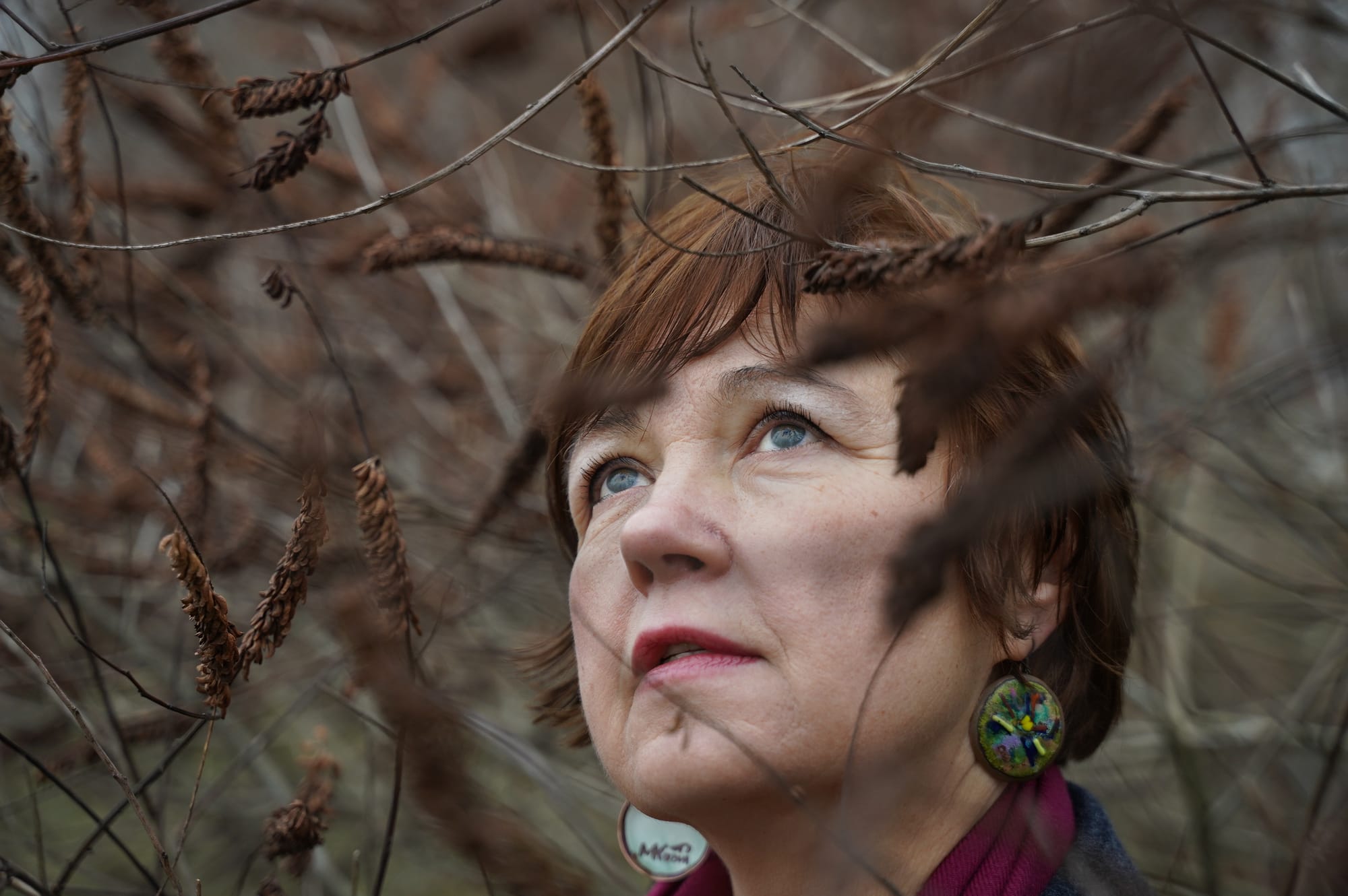
The Ukrainian Contemporary Music Festival 2026 (March 19-21) in New York will feature Alla Zahaykevych (b. 1966), a visionary composer of instrumental and electroacoustic music and award-winning film composer. A student of Yuri Ishchenko and a researcher at IRCAM in Paris, Zahaykevych blends traditional mysticism with modern tools. Her work is deeply rooted in her experience with the folklore ensemble Drevo and her role as a lecturer at the National Music Academy in Kyiv. Throughout the festival, Zahaykevych will present her compositions over three nights themed Places, People, and Practices, with all pieces performed as U.S. premieres.
Starting on March 19th with the theme “Places”, the opening program featuring the International Contemporary Ensemble explores the relationship between geography and imagination, portraying Ukraine’s vast and varied landscapes. Zahaykevych’s piece Vela Invecti (2025) for violin, double bass, flute, and live electronics is about the loss of the land, the home, and the journeys—about the impossibility of returning but the opportunity to persevere. As she wrote in her introduction notes: "Our sails in the ocean, fluttering in the wind. We peer into the horizon between the waves, feeling hope and despair, despair and hope."
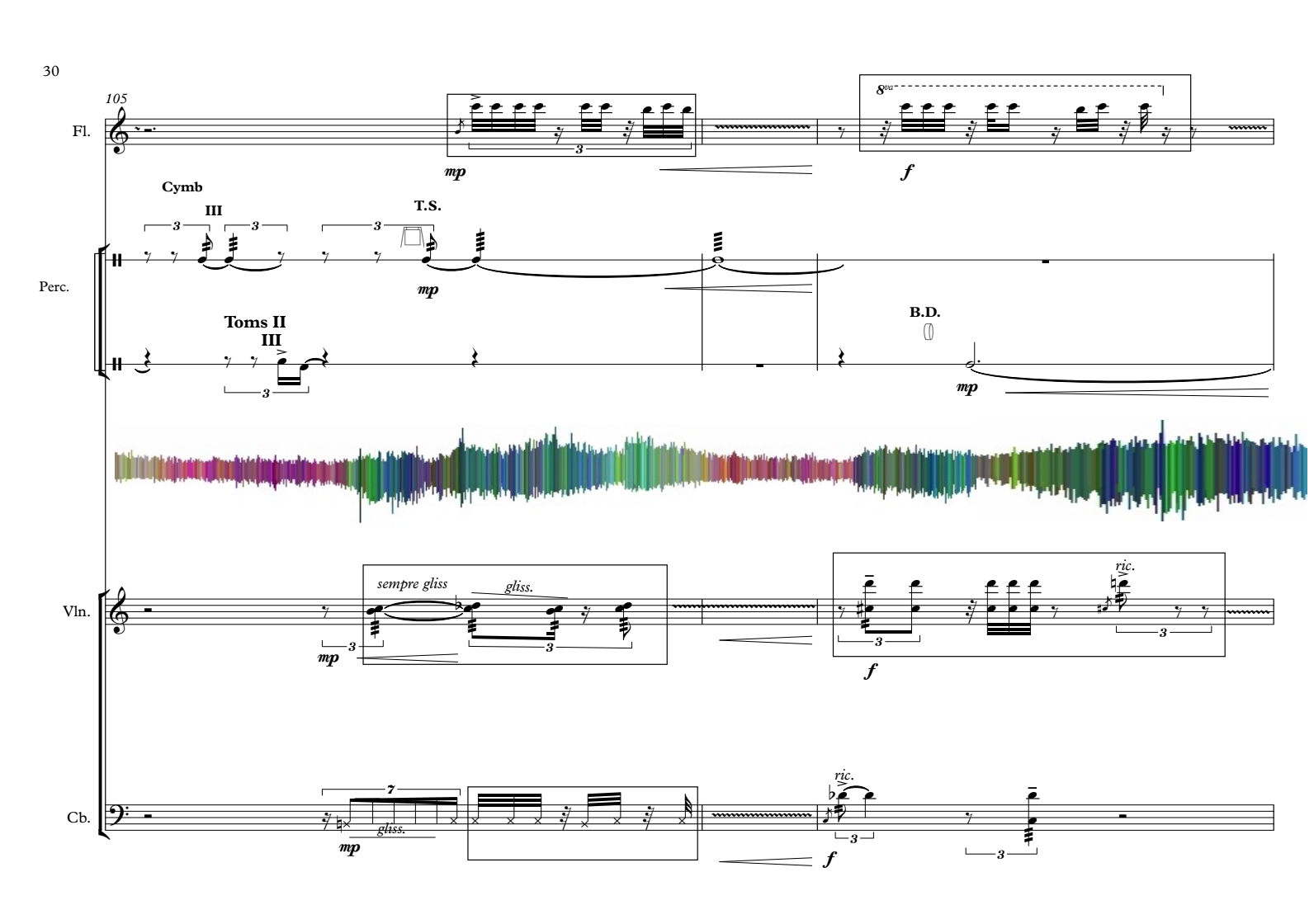
The score introduces a "virtual participant" in the form of a sonogram of the noise of waves of different intensities, which determine the overall dramatic structure of the work. It contains open elements through aleatoric elements that open the piece towards freedom—working with ratios of pitch, noise, key clicks, and the density of melodic motives—leaving parameters to be decided by the sonogram of the ocean waves. Depending on the dynamic profile of the waves, the musicians build the overall texture of the work, moving between sparse and intense, loud and quiet, in collaboration with the conductor.
At the second concert, themed “Peoples”, we will hear her work Rituel (2024) for voice and electronics. The piece is built on a polyphony of three intermingling layers: the live vocals—which switch between two different vocal techniques—and the electronic track. The sound comes in steadily and ominously, as well as reaching moments of catharsis. The electronics don't just accompany the voice; they comment on it, creating an environment that blurs the live singing into echoes and swells. This phenomenon is supported by adding the vocals into the electronic track and modifying it to transgress the possibilities of the room and the moment.
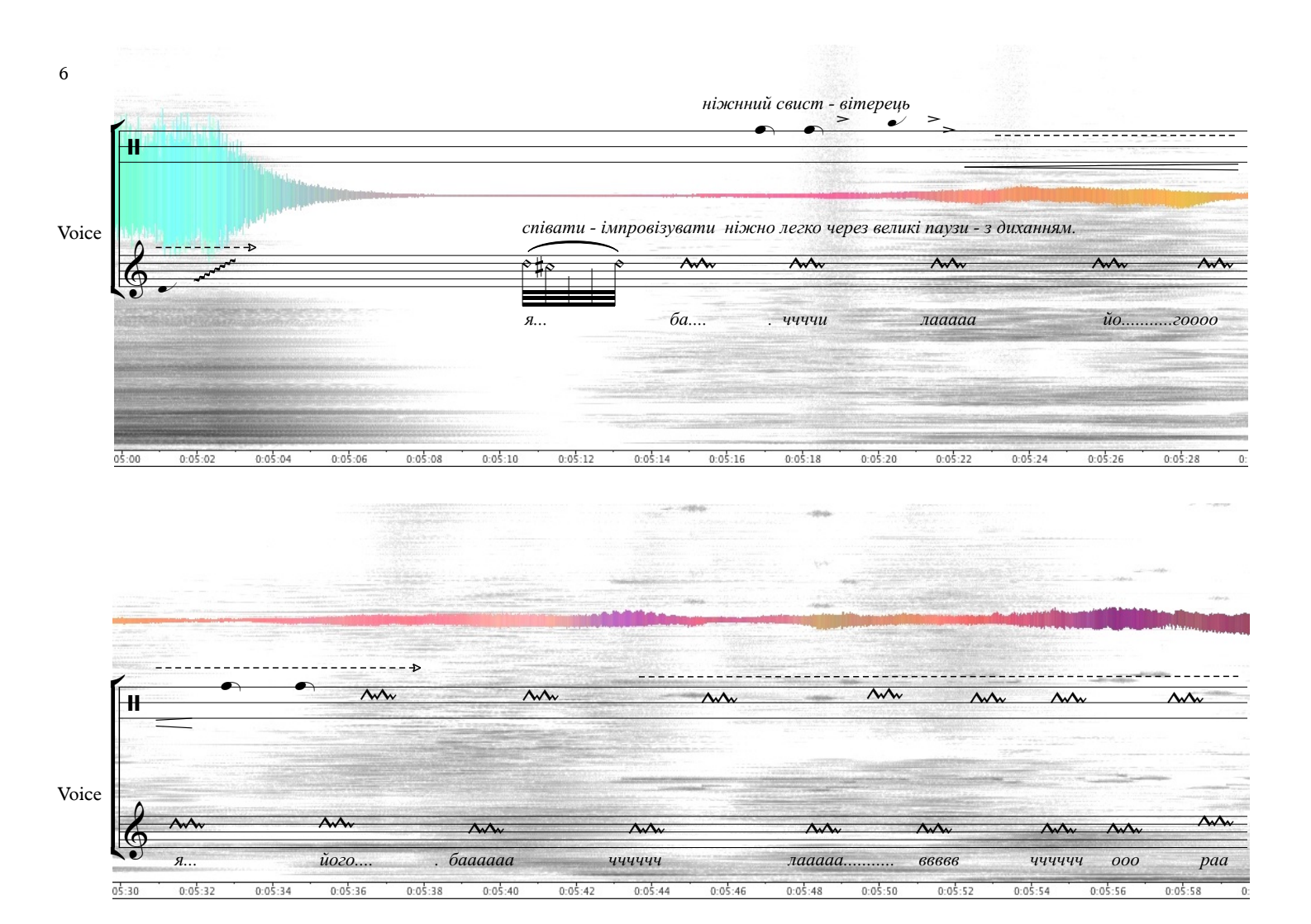
The vocal part consists of Ukrainian folklore elements and more sonic use of language expressed through phonemes and consonants. It creates a conversation of breathy sounds, speaking, and singing, where the electronics create a sense of distance and closeness, sometimes following the performer and sometimes taking over.
Rituel is inspired by the mystery play Druzhni braty Dofu/The Friendly Brothers of Du Fu by Oleh Lysheha (1949-2014), a poet often associated with the New York Group. Lysheha’s play is a place where ancient philosophy, nature, and the mundane collide in a way that feels both ancient and modern, synchronized with the way Zahaykevych uses both traditional and modern vocal techniques.
The text for Rituel comes from the song “Molodoye” (Young/Youth), which talks about a transcendence of age and time, relating to the universe and treating the Milky Way as a familiar, walkable place. Through its electroacoustic layers, Rituel stirs the spiritual perception of the listener. In a soloistic work like this, Zahaykevych brings inner psychology and dialogue out into the concert hall. Following Lysheha, who was often lonely or isolated in his work, he remained in constant conversation with 'brothers' across the ancient past—the poets, the trees, and the stars. Even in solitude, the solo vocalist is in a dialogue that spans across time, bringing the idea of the "brothers" and friendship as a transcendental survival strategy into the performer's layered monologue.
In this piece, Zahaykevych uses combined notation, adjusting to the abstract pitch of breaths and vocal calls to reflect the performer’s voice. The sonic events follow a timeline, not a bar line, creating a space for interaction that is exact but not dictated by the hierarchy of beats in a bar, but by ever-ticking seconds to create the feeling of infinity.
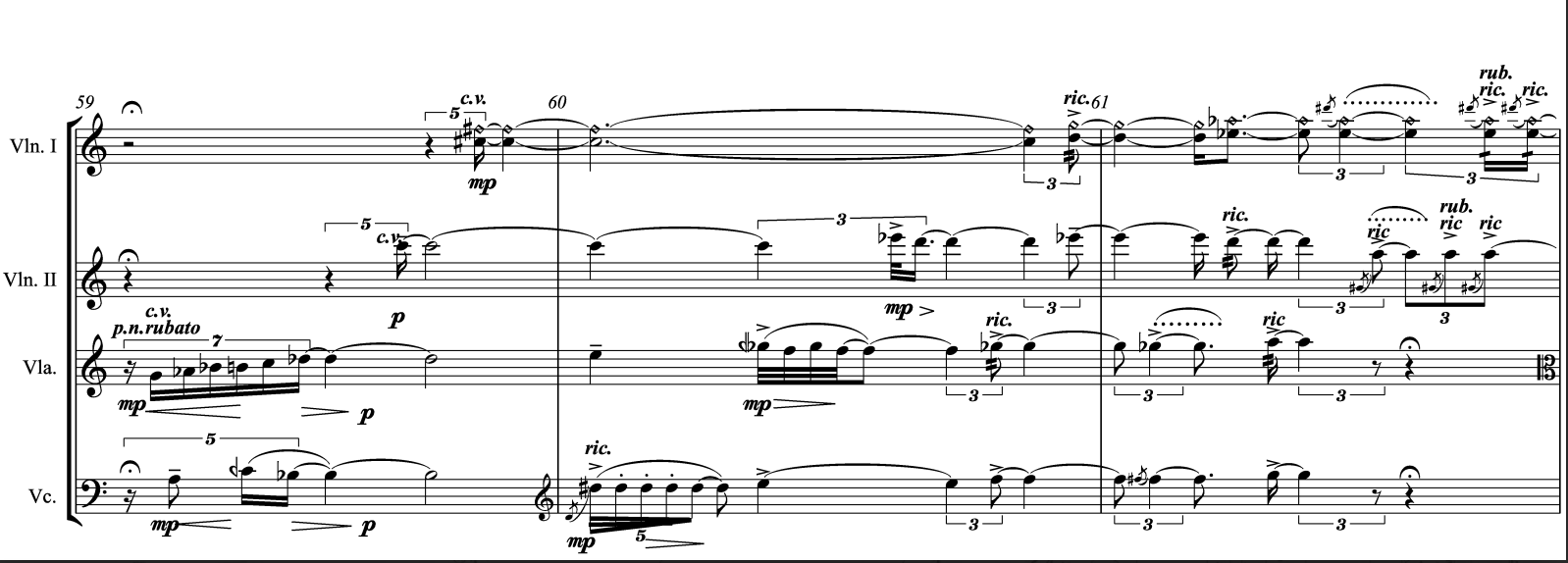
Finally, the third night, named “Practices”, is represented by her String Quartet No. 2 (2009) performed by The Rhythm Method. The music is very dense with information and has a constant development that does not let the audience linger. The quartet was conceived as an imaginary flight over an imaginary landscape. The idea of spatial movement is very important in this piece, expressed by the spatial distribution of the musical material, which contains elements of movement expression such as sequences of pizzicatos, ricochets, and bow swells.
By bringing these U.S. premieres to New York, the festival offers a rare window into Zahaykevych’s unique sonic architecture. Her ability to blend the raw energy of the Ukrainian folklore with the precision of modern electroacoustics creates a dialogue that spans across time and geography. Ultimately, her work reminds us that even in solitude or displacement, we are part of a larger conversation—one that persists through time and space.